
"coffee in the Civil War"
600 article(s) found

Colombia NalongCoffee Bean Grind Scale Flavor Description Description Region Characteristics Introduction
Colombia Coffee Bean Grind Scale Flavor Description Description Introduction to the Region On August 24, 1814, British troops captured the District of Colombia during the War of 1812 and burned most of its public buildings. The American army failed to organize an effective defense and fled after burning down the naval shipyard. British troops burned down U.S. government buildings such as the U.S. Congress, White House and Treasury Department.

A brief introduction to the History and Culture of the Origin and Development of Fine Coffee beans in Renas Manor
Don't underestimate El Salvador's coffee production. In its heyday, it was once the fourth largest coffee producer in the world, but decades of civil war almost dragged down the coffee industry. fortunately, the war has stopped in recent years, and the coffee industry has come back to life. The only benefit that the civil war brought to the country of El Salvador was that the farmers left their fields barren and failed to catch up with the most popular Katimo sun-exposed cultivation train in the past two decades.

A brief introduction to the Origin, Development, History and Culture of Fine Coffee beans in Renas Manor with balanced taste
Don't underestimate El Salvador's coffee production. In its heyday, it was once the fourth largest coffee producer in the world, but decades of civil war almost dragged down the coffee industry. fortunately, the war has stopped in recent years, and the coffee industry has come back to life. The only benefit that the civil war brought to the country of El Salvador was that the farmers left their fields barren and failed to catch up with the most popular Katimo sun-exposed cultivation train in the past two decades.

A brief introduction to the planting Market Price of Fine Coffee Bean varieties with strong Flavor
Rwanda has been growing coffee since colonial times. Although the crops are mainly coffee, the quality of coffee produced in Rwanda is not outstanding, and its status in the coffee world is low, and few people pay attention to it. Most of the coffee varieties grown in Rwanda are bourbon. Rwanda, known as the country of Thousand Hills, has a high-altitude mountain environment, fertile volcanic soil and abundant precipitation.

The taste of balanced Salvadoran coffee introduces Renas Manor.
Flavor: balanced taste, excellent texture suggested baking method: medium to deep, there are many uses of high-quality beans: El SHB taste characteristics: sour, bitter, sweet mild and moderate. Salvadoran coffee ranks side by side with Mexico and Guatemala as the producers of Asa and Merdo, and is fighting for the top one or two places in China and the United States with other countries. The highland of origin is equal in size and size.

A brief introduction to the cultivation of boutique coffee beans in Renas Manor with balanced taste, geographical location, climate and altitude
Don't underestimate El Salvador's coffee production. In its heyday, it was once the fourth largest coffee producer in the world, but decades of civil war almost dragged down the coffee industry. fortunately, the war has stopped in recent years, and the coffee industry has come back to life. The only benefit that the civil war brought to the country of El Salvador was that the farmers left their fields barren and failed to catch up with the most popular Katimo sun-exposed cultivation train in the past two decades.

Introduction to the flavor and taste of chocolate-flavored coffee from Tianyi Manor in Nicaragua
Nicaragua filed an application to the International Court of Justice on April 9, 1984, accusing both sides of the Nicaraguan civil war that the United States Government instructed United States soldiers and nationals of Latin American countries to plant mines in Nicaraguan ports, destroy Nicaraguan oil facilities and naval bases, violate Nicaragua's airspace and sovereignty, and organize and finance military and paramilitary operations such as anti-government groups in Nicaragua.

Introduction to grinding and calibration treatment of coffee beans in El Salvador
A brief History of Coffee production in 1742, coffee was introduced to El Salvador from the Caribbean (1740). In the mid-19th century, El Salvador's original export pillar Indigo (one of the dyes) received a gradual decline in the development of synthetic dyes in Europe, and coffee gradually became the main export product under the guidance of the government. In 1856, the first 693 bags of coffee beans were shipped to Europe. all long

Introduction to Renas Manor in El Salvador Coffee Manor Flavor planting Environment
El Salvador was originally inhabited by the Mayan Indians. The scenery of the Republic of El Salvador became a Spanish colony in 1524. Independence was declared on September 15, 1821 and later became part of the Mexican Empire. In 1823 the empire collapsed and El Salvador joined the Union of Central America. The Republic was proclaimed on February 18, 1841 after the disintegration of the Union in 1838.

How does the coffee from El Salvador taste? How are the raw coffee beans in El Salvador graded?
El Salvador bourbon coffee is famous for its sweetness and balanced taste, with pleasant supple acidity and overall harmony. El Salvador began to grow coffee commercially in the 1850s and became the fourth largest coffee producer in the world in 1880, becoming an important source of economy and a major export crop in El Salvador. But the civil war broke out in the 1980s, and coffee was produced.

El Salvador Coffee Grinding degree Taste characteristics Variety Flavor description Fine Coffee introduction
Many volcanoes in the territory, known as the country of volcanoes, the lowest elevation is 0 meters, the highest is the Santa Ana active volcano 2385 meters. It became a Spanish colony in 1524. Independence from Spain in 1821. In 1824, he joined the Union of Central America, including Guatemala, Honduras, Nicaragua, Costa Rica, and Mexico. In 1841, secession and independence

Introduction to the flavor and taste of El Salvador coffee beans boutique coffee beans in El Salvador coffee producing areas
El Salvador is the largest in Central America.

Brief introduction of coffee producing countries: El Salvador Cafe de El Salvador
Country profile Republic of El Salvador, Repblica de El Salvador in Spanish, the Republic of El Salvador in English. It is located in Central America, bordering Guatemala and Honduras in the north, and the Pacific coastline in the west and south. It is the smallest country in Central America and the most densely populated country in Central America. The land area is 21393.

Introduction to the characteristics of the whole soft and slightly sour Salvadoran coffee flavor manor
In 1998, El Salvador had a total population of 6.1 million (estimated), of which Indo-Europeans accounted for 89 per cent, Indians 10 per cent and whites 1 per cent. In 2012, El Salvador had a total population of 6.090646 million, of which 90 per cent were of mixed Indo-European race, 9 per cent of whites and 1 per cent of Indians aged 0 to 14, 29.7 per cent aged 15 to 64, 63.7 per cent aged 65 and above. 2013, El Salvador
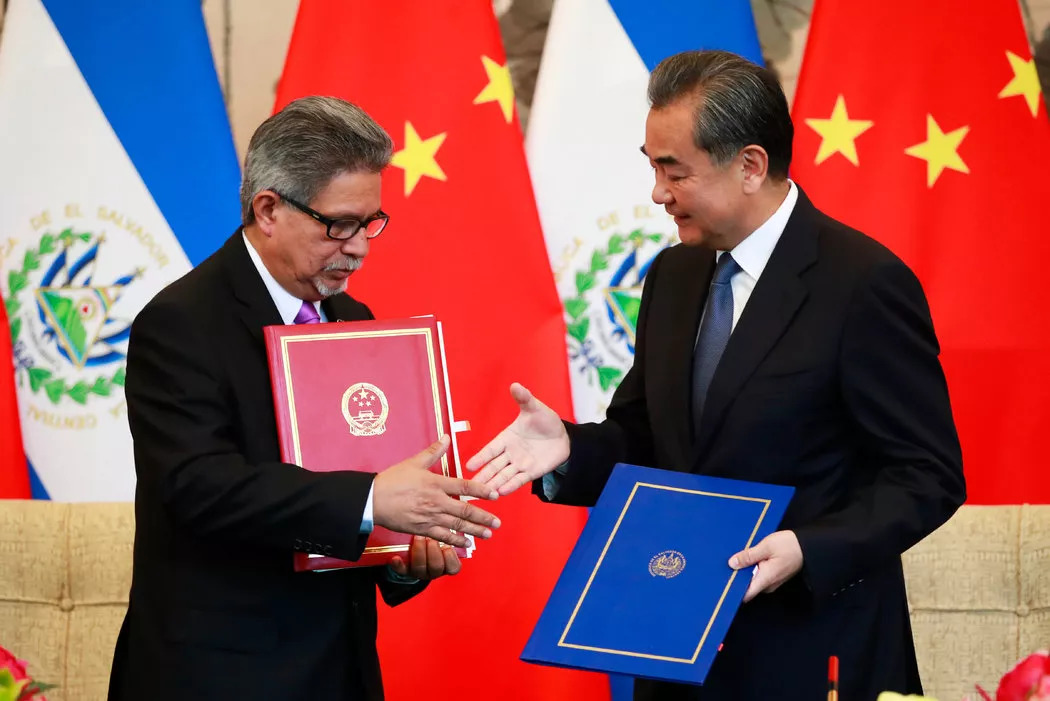
Good news for coffee lovers! China and El Salvador establish diplomatic relations! Learn about Salvadoran coffee.
For more information on coffee beans, please follow the coffee workshop (official Wechat account cafe_style). According to Reuters, State Councilor and Foreign Minister Wang Yi held talks with Salvadoran Foreign Minister Castaneda in Beijing on Aug. 21. After the talks, the foreign ministers of the two countries signed a joint agreement between the people's Republic of China and the Republic of El Salvador on the establishment of diplomatic relations.

Introduction to Salvadoran coffee? What kinds of coffee do you have in El Salvador?
For more information about coffee beans, please follow the coffee workshop (Wechat official account cafe_style) Republic of El Salvador, Repblica de El Salvador in Spanish, the Republic of El Salvador in English. It is located in Central America, bordering Guatemala and Honduras in the north, and the Pacific coastline in the west and south. For Central America

A brief introduction to the History and Culture of the Origin and Development of Fine Coffee and beans in Kimmel Manor with a long aftertaste
In recent years, Rwanda has made great progress in the production and processing of coffee. First of all, coffee fruits are picked manually; coffee production cooperatives are set up all over the country to provide technical guidance to coffee farmers; coffee farmers send them to coffee processing stations for cleaning and screening as soon as possible after picking, and select mature and high-quality coffee fruits for processing Rwanda (Rwanda) Coffee
Introduction to the characteristics of coffee planting flavor in El Salvador
Following Cafe Review (official Wechat account vdailycom) found that Beautiful Caf é opened a small shop of its own Salvador: calm taste and lively flavor go hand in hand with Salvadoran coffee farming began in the late 19th century, with a history of barbarism and violence, a group of foreigners took over the land from the locals. During the civil war from 1980 to 1992,

Ivorian Coffee Industry introduces Ivorian Coffee planting History and Coffee production Export
More information on coffee beans Please follow the coffee workshop (official Wechat account cafe_style) since coffee beans are the second largest export in C ô te d'Ivoire, the country's coffee industry is particularly important to the local economy. [1] in addition, the country was the largest coffee exporter in Africa between the 1970s and 1980s, and is now one of the largest countries in the world.

A brief introduction to the treatment method of Grinding degree and Baking degree of Fine Coffee beans in soft and full-bodied Coffee Manor
Between 700 BC and 1500 AD, some Bantu groups moved to Rwanda to destroy forests and open up wasteland to grow crops. In the 16th century, the Tutsi established a feudal kingdom. In 1884, the Berlin West Africa Conference assigned the territory to the German Empire as part of German East Africa, marking the beginning of the colonial era in Rwanda. In 1890, it was reduced to a German protected place in East Africa. For the first time, the world is big.